Friday, July 11, 2008

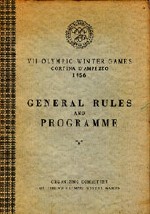
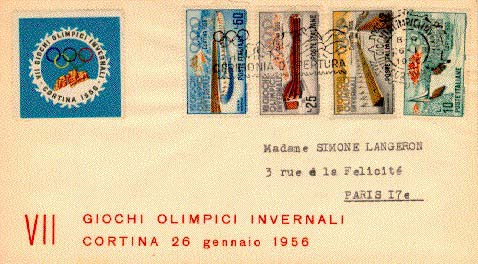
CORTINA D'AMPEZZO 1956 VII Olympic Winter Games


The 1956 Winter Olympics, held in Cortina d’Ampezzo, Italy, were most notable for the first appearance by a team from the USSR. The Soviets immediately won more medals than any other nation. Their speed skaters won three of the four events, while their ice hockey team ended Canada’s domination. Pavel Kolchin became the first non-Scandinavian to earn a medal in cross-country skiing. Anton Sailer won all three men’s races in Alpine skiing - the first clean sweep in Olympic history. Madeleine Berthod celebrated her birthday by winning the downhill by an amazing 4.7 seconds. The United States began to emerge as a definite power in figure skating as Tenley Albright won the women’s title and Hayes Alan Jenkins led an American medal sweep on the men’s side. The Cortina Games were the first to be televised and the last at which the figure skating competitions were held outdoors.

Dates : January 26 to February 5
Participating N.O.C.: 32
Number of Sports : 6
Number of Events : 24
Number of Athletes : 820
Men : 688
Women : 132
Opening : The President Giovanni Gronchi

Wednesday, July 9, 2008

OSLO 1952 VI Olympic Winter Games


In 1952, the Olympics were finally held in Norway, the birthplace of modern skiing. The Olympic flame was lit in the hearth of the home of Sondre Nordheim, the first famous skier, and relayed by 94 skiers to Oslo. Speed skater Hjalmar Andersen starred for the home team, winning three gold medals. His winning margins in the 5,000m and the 10,000m were the largest in Olympic history. In Alpine skiing, the combined event was dropped and replaced by the giant slalom. Andrea Mead Lawrence won both the giant slalom and the slalom even though she was only nineteen years old. Canada won the ice hockey tournament for the fifth time, bringing their cumulative Olympic record to 37 wins, 1 loss and 3 ties. In those 41 games they scored 403 goals while conceding only 34. For the first time, a cross-country skiing event was held for women. The winner was Lydia Wideman of Finland.


Dates : February 14 - 25
Participating N.O.C.: 30
Number of Sports : 6
Number of Events : 22
Number of Athletes : 694
Men : 585
Women : 109
Opening : HRH Princess Ragnhild
Oath : Torbjorn Falkanger
Final Torch Bearers : Eigil Nansen
Candidates cities : Cortina d'Ampezzo (ITA) and Lake Placid (USA)

Tuesday, July 8, 2008

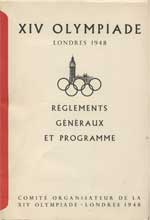
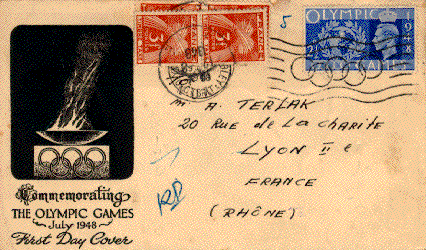
LONDON 1948 Games of the XIV Olympia


The 1948 London Games were the first to be shown on home television, although very few people in Great Britain actually owned sets. A women’s canoeing event was held for the first time - and won by Karen Hoff of Denmark. 17-year-old American Bob Mathias won the decathlon only four months after taking up the sport. He is the youngest athlete in Olympic history to win a men’s athletics event.


Two athletes who were Olympic champions in 1936 managed to defend their titles twelve years later. They were Ilona Elek of Hungary in women’s foil fencing and Jan Brzak of Czechoslovakia in the canoeing Canadian pairs 1,000m.


Fanny Blankers-Koen of the Netherlands was the world record holder in six events, but, according to the rules of the day, was only allowed to enter four. She won all four: the 100m dash, the 80m hurdles, the 200m and the 4x100m relay. Concert pianist Micheline Ostermeyer of France won both the shot put and the discus throw. Karoly Takacs was a member of the Hungarian world champion pistol shooting team in 1938 when a grenade shattered his right hand - his pistol hand. Takacs taught himself to shoot with his left hand and, ten years later, he won an Olympic gold medal in the rapid-fire pistol event.


Dates: July 29 - August 14
Participating N.O.C.: 59
Number of Sports: 17
Number of Events: 136
Number of Athletes: 4099
Men's : 3714
Women's : 358
Opening: His Majesty King George VI
Oath : Donald Finlay
Number of torch bearer: 1 416
Final Torch Bearer: John Mark
Candidates cities:
Baltimore (USA), Lausanne (SUI), Los Angeles (USA), Minneapolis (USA) and Philadelphie (USA)

Monday, July 7, 2008

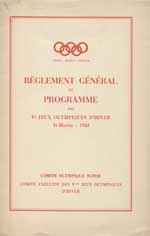
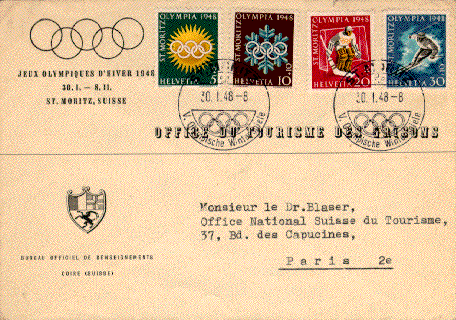
ST. MORITZ 1948 V Olympic Winter Games


The 1940 Winter Olympics were scheduled for Sapporo, Japan. War with China forced the Japanese to admit, in July 1938, that they would be unable to host the Games. St. Moritz was chosen as an alternative site, but the continuing dispute about ski instructors led the Swiss to withdraw as well. The Germans volunteered Garmisch-Partenkirchen in July 1939, but four months later the reality of World War II forced the cancellation of the Olympics. The first postwar Games were held in St. Moritz in 1948. Germany and Japan were barred from competing, but everyone else took part eagerly, and it was clear that the Winter Olympics had successfully survived the 12-year hiatus. For the first time, North Americans won gold medals in figure skating. Barbara Ann Scott of Canada took the women’s title and Dick Button of the United States the men’s. In general, athletic success was evenly divided. Although 22 events were contested, only French Alpine skier Henri Oreiller and Swedish Nordic skier Martin Lundström were able to win two gold medals.

Dates : January 30 - february 8
Participating N.O.C.: 28
Number of Sports : 7
Number of Events : 22
Number of Athletes : 669
Men : 529
Women : 77
Opening : President of the Helvetic Confederation Enrico Celio
Oath : Riccardo "Bibi" Torriani
Final Torch Bearers : Richard Torriani
Candidates cities : Lake Placid (USA)

Sunday, July 6, 2008

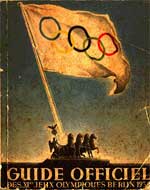
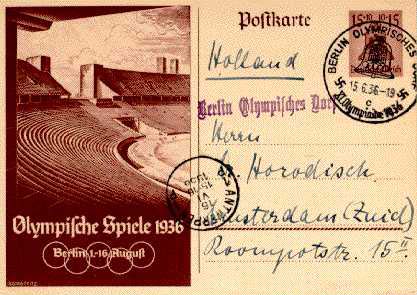
BERLIN 1936 Games of the XI Olympiad


The 1936 Olympics, held in Berlin, are best remembered for Adolf Hitler’s failed attempt to use them to prove his theories of Aryan racial superiority. As it turned out, the most popular hero of the Games, was the African-American sprinter and long jumper Jesse Owens, who won four gold medals. During the long jump competition, Owens’ German rival, Luz Long, publicly befriended him in front of the Nazis. 1936 saw the introduction of the torch relay, in which a lighted torch is carried from Olympia to the site of the current Games. The 1936 Olympics were also the first to be broadcast on a form of television. Twenty-five large screens were set up throughout Berlin, allowing the local people to see the Games for free. Basketball, canoeing and team handball made their first appearances, while polo was included in the Olympic programme for the last time. Thirteen-year-old Marjorie Gestring of the United States won the gold medal in springboard diving. She remains the youngest female gold medalist in the history of the Summer Olympics. Inge Sorensen of Denmark earned a bronze medal in the 200m breaststroke at the age of 12, making her the youngest medalist ever in an individual event. Hungarian water polo player Olivier Halassy won his third medal despite the fact that one of his legs had been amputated below the knee following a streetcar accident. Rower Jack Beresford of Great Britain won a gold medal in the double sculls event, marking the fifth Olympics at which he earned a medal. Kristjan Palusalu of Estonia won the heavyweight division in both freestyle and Greco-Roman wrestling.

Dates: August 1st - 16
Participating N.O.C.: 49
Number of Sports: 19
Number of Events: 129
Number of Athletes: 4 066
Men's : 3 738
Women's : 328
Opening: Chancellor A. Hitler
Oath : Rudolf Ismayr
Number of torch bearer: 3 331
Final Torch Bearer: Fritz Schilgen
Candidates cities: Barcelone (ESP)