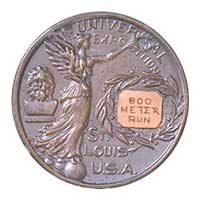
The 1904 St. Louis Olympics organizers repeated all of the mistakes of 1900. The Olympic competitions, spread out over four and a half months, were lost in the chaos of a World’s Fair. Of the 94 events generally considered to have been part of the Olympic program, only 42 included athletes who were not from the United States. The 1904 Olympics did have a few highlights.
They were the first at which gold, silver and bronze medals were awarded for first, second and third place. Boxing and freestyle wrestling made their debuts. Marathon runners Len Tau and Jan Mashiani, Tswana tribesmen who were in St. Louis as part of the Boer War exhibit at the World’s Fair, became the first Africans to compete in the Olympics. One of the most remarkable athletes was the American gymnast George Eyser, who won six medals even though his left leg was made of wood. Chicago runner James Lightbody won the steeplechase and the 800m and then set a world record in the 1,500m.
Dates : July 1st- November 23
Participating N.O.C.: 12
Number of Sports: 16
Number of Events: 89
Number of Athletes: 617
Men: 609
Women: 8
Opening: David R. Francis, President of the World's fair
Bid city: Chicago (USA)
The Exposition Universelle of 1900 was a world's fair held in Paris, France, to celebrate the achievements of the past century and to accelerate development into the next. The style that was universally present in the Exposition was Art Nouveau. Exposition Universelle viewMore than 50 million people attended the exhibition (a world record at the time), yet it still failed to turn a profit, costing the French government 2,000,000 Francs. The fair included more than 76,000 exhibitors and covered 1.12 square kilometres of Paris.
The Exposition Universelle was where talking films and escalators were first publicized, and where Campbell's Soup was awarded a gold medal (an image of which still appears on its label). At the Exposition Rudolf Diesel exhibited his diesel engine, running on peanut oil. Brief films of excerpts from opera and ballet are apparently the first films exhibited publicly with projection of both image and recorded sound. The Exposition also featured many panoramic paintings and extensions of the panorama technique, such as the Cinéorama, Mareorama, and Trans-Siberian Railway Panorama.
Alexandre III bridgeThe exhibition lasted from 14 April until 10 November 1900. A special committee, led by Gustave Eiffel, awarded a gold medal to Lavr Proskuryakov's project for the Yenisei Bridge in Krasnoyarsk.
A number of Paris' most noted structures were built for the Exposition, including the Gare de Lyon, the Gare d'Orsay (now the Musée d'Orsay), the Pont Alexandre III, the Grand Palais, La Ruche, and the Petit Palais. The first line of the Paris Metro also began operation to co-incide with the Exposition. Although completed in just 18 months, it was nevertheless slightly late, taking its first paying passengers to the Ancien Palais du Trocadéro site on 19 July 1900.
Part of the Exposition was the Second Olympic Games, which were spread over five months. So unnoted were these games that many athletes died unaware that they had been Olympians. The games also marked the first participation by female athletes and, in such sports as tennis, football (soccer), polo, rowing and tug of war, teams were multinational.
A Human Zoo was present at the exposition.
The Finnish Pavilion at the Exposition was designed by the architectural firm of Gesellius, Lindgren, and Saarinen. It was published in Dekorative Kunst 3 (1900)
The Games of 1900 were held in Paris as part of the Exposition Universelle Internationale - the Paris World’s Fair. The exposition organizers spread the events over five months and de-emphasized their Olympic status to such an extent that many athletes died without ever knowing that they had participated in the Olympics. Women made their first appearance in the modern Games. The first to compete were Mme. Brohy and Mlle. Ohnier of France in croquet. The first female champion was in tennis: Charlotte Cooper of Great Britain. Tennis was one of five sports in which athletes from different nations competed on the same team. The others were football, polo, rowing and tug of war. Alvin Kraenzlein won four athletics events in three days and, on 16 July, Ray Ewry, who had overcome childhood polio, won three championships in one day - all in the standing jump events.
Dates : May 14 - october 28 Participating N.O.C.: 24 Number of Sports: 20 Number of Events: 88 Number of Athletes: 1 225 Men: 1 206 Women: 19
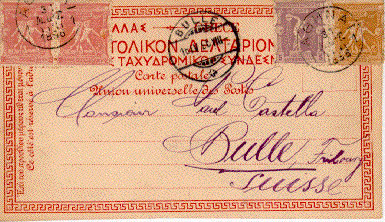
The revival of the ancient Olympics attracted athletes from 14 nations, with the largest delegations coming from Greece, Germany, France and Great Britain. On 6 April 1896, the American James Connolly won the triple jump to become the first Olympic champion in more than 1,500 years. Winners were awarded a silver medal and an olive branch. The German athlete Carl Schumann finished in the top five events of three different sports. The people of Athens greeted the Games with great enthusiasm. Their support was rewarded when a Greek shepherd, Spyridon Louis, won the most popular event, the marathon.
Dates: March 25- April 3 Participating N.O.C.: 13 Number of Sports: 9 Number of Events: 43 Number of Athletes: 245 Men: 245 Women: - Opening: King George 1st of Greece
FINETUNE RADIOListen all your favorite artists from this single app like-Akon, Avril, Beyonce, Cristina, Coldplay, U2, The Killers, Green Day, 2 PAC, Alicia Keys, Bon Jovi, Creed, Radio Head, John Mayer.... List Goes On.Don't wait just Tune into Finetune.